

This strange little dude popped up in my garden last night (inland
Eastern Cape, South Africa). Looks like a stinkhorn, but no smell. Found here
This strange little dude popped up in my garden last night (inland
Eastern Cape, South Africa). Looks like a stinkhorn, but no smell. Found here

Personal note: They resemble devil horns in pairs!

Ghost Plant, Monotropa uniflora. Ericaceae family. What an honor to find these rare beauties! They aren’t out in their full glory yet, but they are still breathtaking. These
plants completely lack chlorophyll and cannot do photosynthesis.
Instead, they get their nutrients from the fungi that are attached to
nearby conifers. Tiger Mountain, WA. 6/5/2015.

Witch’s heart
Latticed stinkhorn, Clathrus ruber, a saprophyte fungus feeding on decaying woody plant material. Also known as “Coeur de sorcière” (witch’s heart) in France. (Versailles, France)

Sidsel Oba, Norway.
 https://embedr.flickr.com/assets/client-code.js
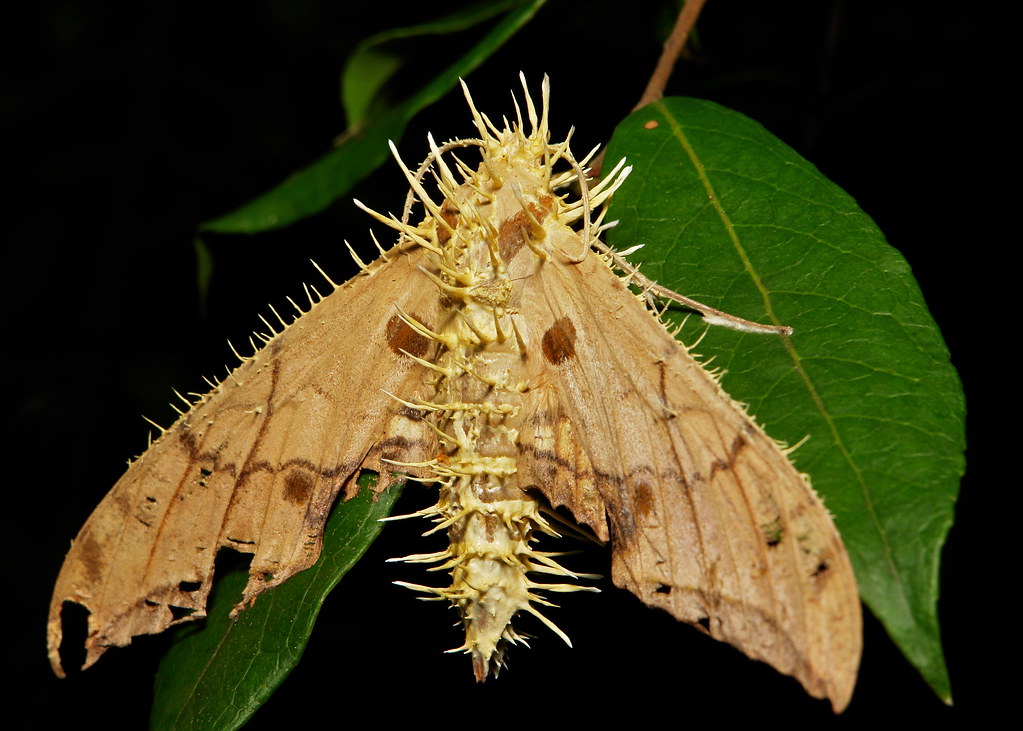
This hawk moth (most likely a Violet Gliding Hawk Moth (Ambulyx liturata, Sphingidae)) has been parasitized by an Akanthomyces fungus (probably Akanthomyces pistillariiformis), a Cordyceps anamorph peculiar to moths.
After killing the moth, the fungus then totally engulfs and embalms the corpse producing this macabre sight. (An entomopathogenic fungus is a fungus that can act as a parasite of insects and kills or seriously disables them.)
Pu’er, Yunnan, China.
by Sinobug (itchydogimages) on Flickr. See more Chinese insects and spiders on my Flickr site HERE


 סלומה
סלומה 