

West Lenoir Street, Raleigh, NC
West Lenoir Street, Raleigh, NC


Threads of silk following a mass spider ballooning (or kiting). (Source)

A Forest Service worker photographed a
fire burning inside a tree while he’s fighting Western N.C. wildfires.
He said there is no filter on the photo, rather, the fire is so hot this
is its actual color. From here.

Gum tree sap. The trees bleed this blood-red sap in reaction to
insect borer attacks. These insects create tunnels and chambers as they
consume the wood. The tree responds by flooding the wounded area with a
chemical called
‘kino’, but it can also be sap or amber. The kino engulfs the insect —
trapping it and hopefully killing it.
Photo credit:
Evelyn Ward de Roo

Caterpillar of fruit piercing moth
West Bengal India
Oct 2016 by Arabinda Pal. via:
The Biologist Apprentice
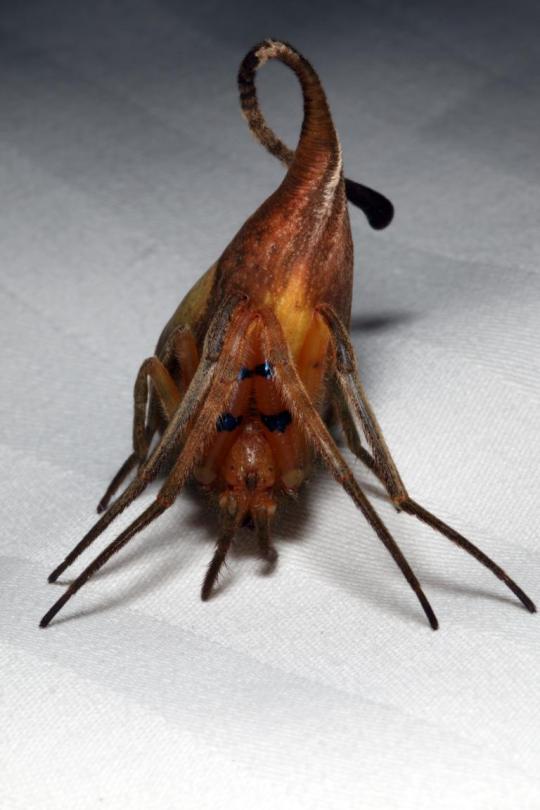
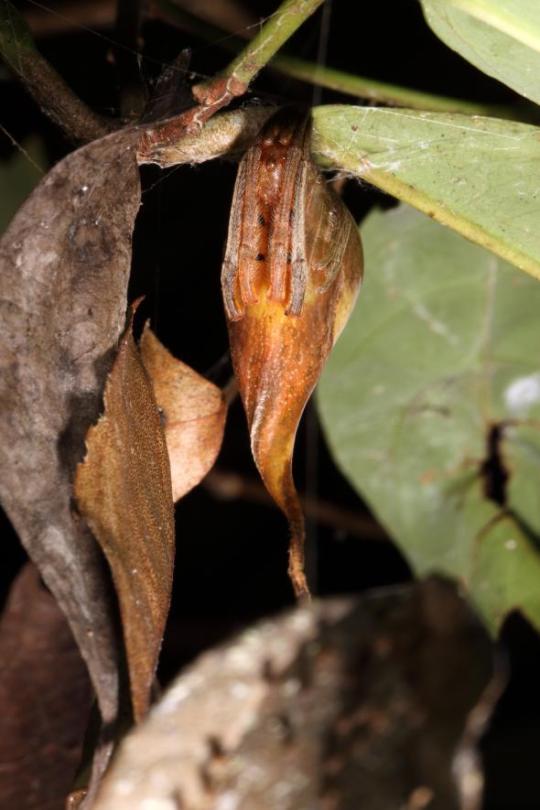
For Matjaz Kuntner, it was just another evening trek through southwestern China’s Yunnan rain forest—until his headlamp illuminated a strand of spider silk.
That’s not so surprising on its own. But what attracted the
arachnologist’s attention is the silk appeared to attach a leaf to a
tree branch. After looking closer, Kuntner realized one of these leaves
was actually a spider.
“If there’s a web, there’s a spider,” says Kuntner, of the
Smithsonian Institution and the Evolutionary Zoology Laboratory in
Slovenia.
The arachnid uses its silk to attach leaves to tree branches, and then hides among the branches, according to a new study in the Journal of Arachnology.
The researchers still aren’t sure why the spider does this, but they
believe it’s likely to hide from predators or sneak up on prey…

Tree Trunks in Snow by Sven Svendsen.


Deep in the Mexican jungle, lies an underwater cave called the Angelita Cenote.
The pool is 200 feet deep and even contains a separate river that runs
along the bottom on the underwater cave. This is due to the different
levels of salinity in the water, causing denser water to sink to the
bottom.

 סלומה
סלומה 